
As the United Nations states, “Agenda 2030 for Sustainable Development is an action plan for people, the planet, and prosperity, adopted in September 2015 by the governments of 193 UN member countries.” This marks the first time global leaders have come together to commit to a shared action under such a wide-reaching, universal agenda.
Agenda 2030 was developed in response to the most urgent global challenges, such as poverty, inequality, and climate change, underscoring the need for a collective approach to address them.
The 17 Sustainable Development Goals (SDGs)
Agenda 2030 is built around 17 Sustainable Development Goals, or SDGs, which include:
- End all forms of poverty everywhere through inclusive economic growth, job creation, and promoting equality.
- Eliminate hunger by achieving food security, improving nutrition, and promoting sustainable agriculture.
- Ensure health and well-being for all, across all ages.
- Guarantee inclusive and equitable quality education, ensuring lifelong learning opportunities for all. Despite progress, the right to education remains a critical global challenge.
- Achieve gender equality and empower all women, combating discrimination and violence.
- Ensure access to clean water and sanitation for all.
- Provide access to affordable and clean energy for all.
- Promote sustained, inclusive, and sustainable economic growth, full and productive employment, and decent work for all.
- Build resilient infrastructure, promote sustainable industrialization, and foster innovation.
- Reduce inequalities within and among countries to promote social, economic, and political inclusion for all.
- Make cities and human settlements inclusive, safe, resilient, and sustainable, ensuring access to essential energy, housing, and transportation services.
- Ensure responsible consumption and production patterns through more efficient use of natural resources and reduced food waste.
- Combat climate change through comprehensive actions, policies, and strategies at every level.
- Conserve and sustainably use oceans, seas, and marine resources.
- Manage forests sustainably, combat desertification, halt land degradation, and protect biodiversity.
- Promote peaceful and inclusive societies, universal access to justice, and robust, accountable institutions.
- Strengthen the means of implementation and reinvigorate global partnerships for sustainable development.
The progress and challenges in achieving these goals are reviewed annually by the UN High-Level Political Forum, guided by the UN Economic and Social Council and takes place under the auspices of the General Assembly every four years.
To track the global implementation of Agenda 2030, the UN Statistical Commission has set up the Inter-Agency Expert Group on SDGs (IAEG-SDGs), which focuses on defining indicators for monitoring progress.
Agenda 2030: Where Do We Stand?
Despite efforts, official data shows that the progress towards the goals of Agenda 2030 is not as promising as expected.
According to the Europe Sustainable Development Report Performance 2025, which evaluates EU countries’ progress toward the SDGs, many indicators have shown little to no progress since 2015, with even fewer improvements since 2020. Notably, there has been stagnation, and in some cases a reversal, in the indicators related to the Leave-No-One-Behind principle, which measures inequalities in access to opportunities, well-being, and services within countries.
 Andrea Bocelli Foundation’s Commitment to Agenda 2030
 Andrea Bocelli Foundation’s Commitment to Agenda 2030
All projects carried out by the Andrea Bocelli Foundation (ABF) in Italy and globally under the mission of “Empowering people and communities” are aligned with one or more of the Sustainable Development Goals outlined in Agenda 2030.
Among the most crucial is Goal 4, which aims to ensure inclusive and equitable quality education. This goal is central to ABF’s mission, grounded in the belief that education is the cornerstone of individual and collective empowerment.
ABF’s work spans a variety of initiatives that align with Agenda 2030’s goals. Some notable projects include:
- ABF GlobaLab (Sustainable Development Goals 4 and 11): A laboratory program for young people aged 16 to 25, focused on mobilizing their initiatives by leveraging their cognitive, emotional, and value-driven resources.
- ABF Voices of (Sustainable Development Goal 4): A project that creates regional choirs in vulnerable areas of the world, using music as a universal tool for empowerment, enabling young talents to thrive and positively impact their communities.
- ABF Digital Lab (Sustainable Development Goal 4): This initiative supports hospital schools, ensuring that children in paediatric wards have access to quality education, even in challenging circumstances.
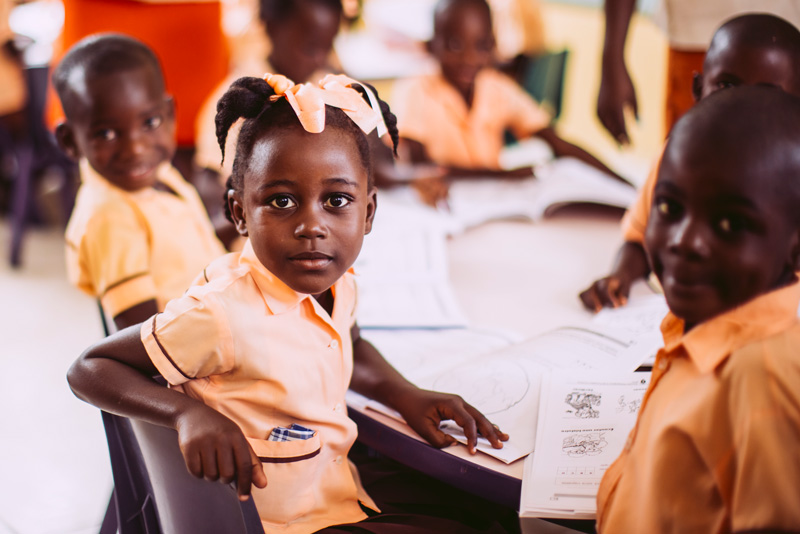
- In Haiti, ABF has built six schools in partnership with The St. Luke Foundation for Haiti, giving local children and youth the opportunity for a brighter future through education.
In addition, ABF’s Water Truck project (Sustainable Development Goal 6) delivers 24,000 gallons of clean water to over 400,000 people in the slums of Cité Soleil, directly addressing the urgent need for clean water and sanitation.
Through these and other projects, the Andrea Bocelli Foundation is actively contributing to realizing Agenda 2030’s goals, understanding that every action, no matter how small, can lead to meaningful and lasting change.


